
The Investment Management industry is a behemoth, a multi-trillion dollar industry. Active investment managers still dominate their lower-cost passive peers in terms of their percentage share of this money. Due to their substantially higher fees, active managers also take the lion’s share of the income.
On the face of it this is extraordinary.
TheSPIVA datafor 2024 from Standard & Poors shows 90% of US equity funds underperforming the S&P 500 over 15 years and 84% over ten years.
Any other industry with a 90% failure rate would have been wound-up by now and alternatives found.
How is the investment management industry getting away with it?
Firstly, it is important to understand that the mathematical impossibility of the consistent out-performance of an active managerhas been known for decades. However, over this period, the industry has managed to make a lot of money, and it uses this money to employ very clever people to convince us otherwise.
They play on several human behavioral biases to get our brains to deny what seems obvious from the data.
Firstly, we have an inbuilt perception that is something is expensive it must be of greater quality.
A good friend of mine loudly declaims his adviser as the best there is because he turns up to meetings chauffeur driven in a Bentley. The adviser works for one of the biggest advice networks in the UK. The adviser is successful at gathering clients and overcharging them, he is much less successful on behalf of his clients. Perceptions are powerful though.
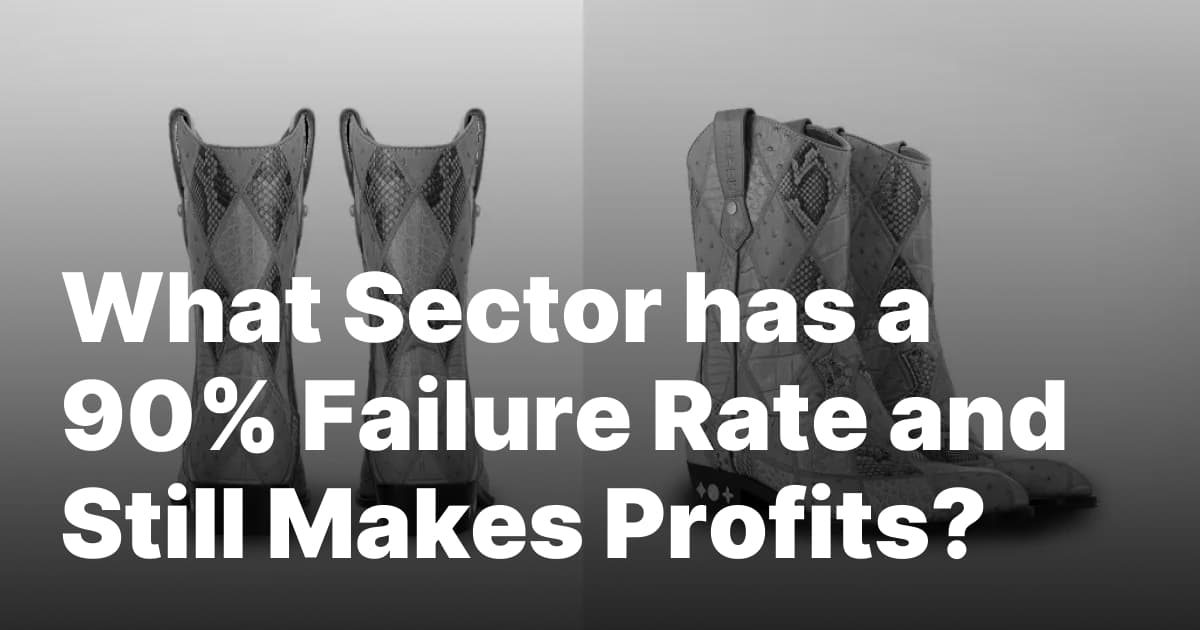
Captain Sam Vimes made the point in Terry Pratchett’s book Men at Arms that, a poor man pays more for boots overall because he can only afford a $10 pair that wear out after a year, whereas the rich man can afford a pair for $50 that last ten years. I suspect that we would have taken a dim view of the man that pays £13,100 for a pair ofLouis Vuitton Riders, but the broad theory holds true.
Except when it comes to investment management whereas we have seen, extraordinarily, more actually buys you less. In this case the $10 boots are the ones that are lasting for 10 years and not the other way around. In fact, it is the $50 boots whose cardboard soles are getting wet so that you can tell where you are by the feel of the cobbles under your feet.
A rule to bear in mind with investment managers is, the deep the carpet pile in their office, the worse their returns. I once had a meeting with an investment manager on behalf of my client. Their office fronted onto a busy roundabout but internally there was the hush of a posh restaurant. This was achieved through the thickest curtains and deepest carpets I have ever seen. My client was paying for this in high fees and lost performance.
The other clever tactic is to overcomplicate. If something takes a long time to explain, so goes the reasoning, it must be clever and worth investing in. No one ever invests in the start-up whose premise can be explained in a single slide. Investors lover a multi-slide deck and a sharp suited presenter.
Overcomplication in investment management is not just rife, it is the most common approach.
If we start with what we know; shares produce the best long-term returns and cash or bonds give you some stability of you have a short-term expenditure need.
Everything else is therefore complication.
The big investment houses have expensive investment services that underperform but they look clever. We have seen portfolios containing funds investing in property, commodities, private equity, complex ones betting with or against price movements and even options on the Chicago Volatility Index or VIX!
All of this is justified in the name of controlling volatility (or risk), no is really claiming that these ‘alternative’ assets will give a better return than shares. Of course, anything that doesn’t give a better return, will give a worse return and therefore there has to be a good reason to accept that trade-off when cash or bonds can do the same. The mantra that controlling volatility is crucial to clients and worth them paying a fortune for is driven more by the industry’s need to baffle and convince clients to invest than in the service of the client’s own needs.
If as much blood, sweat, tears and client fees was put into educating clients that volatility is a good thing, shares give the best return and cash/bonds can cover short-term needs, then the clients would be better off but there would be fewer investment managers with Bentleys.
There are many other natural human biases that the industry exploits but those are for examination another day. For now clients seem to be voting with their feet, half a trillion dollars moved from active to passive solutions just in the12-months to March 2025.
For full disclosure, whilst most of our clients invest in low-cost passive solutions, some choose active management for very niche areas of Social Impact investing, where their tax domicile requires them to exclude certain countries or where they want to be the co-driver of the portfolio.
We don’t have in-house solutions but are paid by our clients to source the best solutions to fit their needs. We can only do this because we are paid a fixed price per month and not a % of the money you have invested.
If you want to debate any of these points with us, get in touch with one of our team. We are currently managing and monitoring solutions for clients from our office in Hook, Hampshire, throughout the UK and internationally using latest technology.